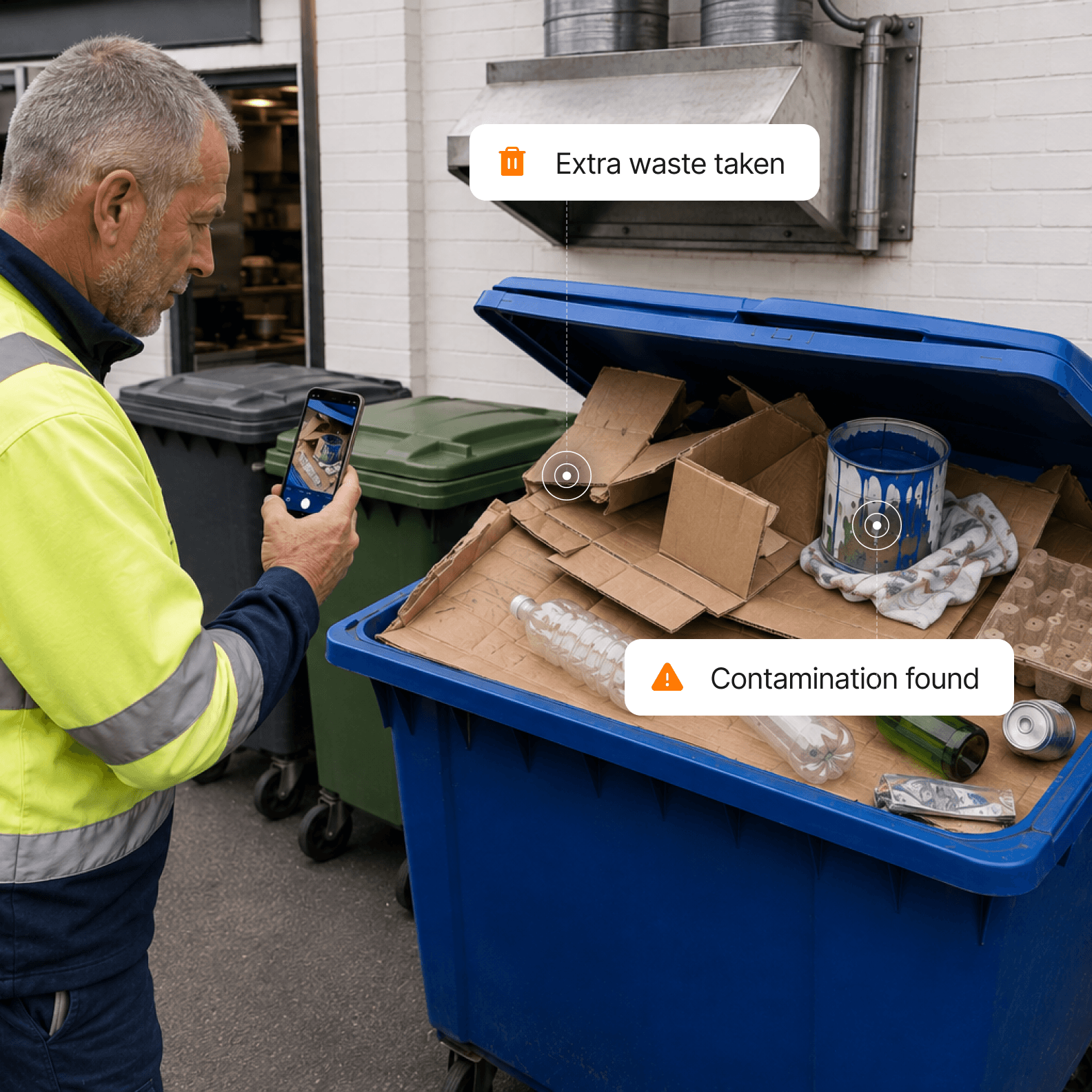
Trade waste looks predictable. The reality rarely is. Extra waste gets taken. Bins turn up contaminated. Access isn’t always possible. Collections get missed or reworked. Drivers need to capture reality. The office turns that into revenue. If either part fails, you lose money.
Trade waste systems show you what went wrong.
Waste Logics shows you why it keeps happening,
and how to stop it


1. Extra work isn’t easy to charge for
2. Evidence exists but lives in the wrong place
3. Service changes don’t line up with billing
Waste Logics reduces mistakes before they happen and flags problems while they still matter. It guides work during the day, instead of leaving people to piece things together later.
When reality changes, the system shows what changed and why. And over time, those signals reveal where the operation needs to change next. Not just managing today. Planning what comes next.
What that looks like in practice
Driver prompts when service conditions change. On-round changes automatically linked to contracts and billing. Exceptions surfaced with context attached. Reporting that highlights repeat margin pressure across rounds.
Director
You do not lose money dramatically. You lose it quietly. Routes that look busy but underperform. Customers that quietly erode margin. Credits that repeat every month.
What changes
You stop waiting for reports. You ask the question and see the answer.
AI Reporting
Ask business questions in plain English and get clear answers in seconds. Drill into the why behind credits, revenue shifts and route performance.
- Supporting tools
- Net Profit per Job and Vehicle.
Understand true profitability, not just revenue. - Route Performance Visibility.
See which rounds are quietly eroding margin. - Customer Dashboard.
Reduce inbound queries and friction.
Finance
Month end should not feel like detective work. Spreadsheets get exported. Emails fly around the business asking what happened on that job. Corrections pile up.
What changes
Operational data flows directly into billing logic, reducing invoice queries.
Two Way Accounting Integration
Sync invoices and payments with Sage or Xero without double entry. Live stop status and credit limits update automatically. Operations and drivers can see immediately when an account is on stop.
Explore Accounting Integration
- Supporting tools
- Automatic Contract Linking
On-round changes flow into invoicing rules. - AI Reporting
Interrogate revenue, credits and profitability instantly.
Operations
Extra waste gets taken. Photos are missed. The bins weren’t out. You end up firefighting.
What changes
What happens on the round is captured properly, visible immediately and acted on in real time.
Driver App
Capture service changes, photos and weights in real time.
- Supporting tools
Weighing Equipment Integration. Syncs weight data directly from the trucks bin weigh and underbody weighing systems. - Customer Dashboard
Give customers visibility into collections and documents. - Exception Visibility
Spot, review and send issues before invoices go out. - Electronic Archiving
Every ticket and photo stored against the job.
Transport Planner
You spend hours building rounds based on experience. Jobs get added late. Vehicles break down. Priorities change. You reshuffle constantly.
What changes
Routes are built in minutes, not hours. And when the day shifts, the plan shifts with it.
Route Optimisation
Purpose-built for waste. Understands vehicle capacity, multiple compartments, waste streams and access restrictions.
Handles day-to-day changes without reshuffling familiar rounds. Restructure rounds when sites or collections shift. Cuts wasted mileage while keeping planners in control.
- Supporting tools
- Driver Sheets
Drag and drop rounds without rebuilding from scratch. - Live Round Visibility
See vehicle progress and capacity in real time. - Driver App
Round updates sync automatically, so everyone works from the same plan.
- Fewer missed charges.
- Fewer credits raised to make problems go away.
- Hours saved piecing together what actually happened.
- Issues surface with enough time to act, not after the margin has already gone.
- Less firefighting at month end.
- Clearer answers during the month.
- Confidence in what you invoice, what you report, and what you actually make on each job.
Waste Logics was built inside a live waste operation, where rounds didn’t run to plan and margin depended on the details.
It had to reduce guesswork. It had to surface risk early. It had to support better decisions, not just record activity.
That’s still how it behaves today.
Waste Logics is built for operators where small changes during the day have real commercial impact.
If the round rarely changes and hindsight reporting works for you, it may be overkill.
If margin depends on catching issues early and shaping the operation over time, it’s built for that reality.
FAQs
Trade waste software helps waste operators manage commercial waste collections, contracts, billing and reporting.
It connects what happens on the round with the systems used in the office so service changes, additional waste and missed collections can be captured and managed properly.
Trade waste collections often run on regular service schedules, but the reality of the round can change day to day.
Extra waste may be collected, contamination can occur, bins may not be accessible, and collections sometimes need to be reworked. Systems need to capture what actually happened so the office team can turn that activity into accurate billing and reporting.
Trade waste operators typically need software that supports:
- round planning and route management
- capturing service changes during collections
- linking operational activity with contracts and billing
- visibility into exceptions and issues before invoicing
- reporting to understand performance across routes and customers
Waste Logics helps operators see what is happening during the day and understand the impact on the business.
Service changes captured on the round are linked to contracts and billing, exceptions can be reviewed before invoices are sent, and reporting highlights where revenue, credits or route performance may need attention.
Yes.
When operational data is captured properly and connected to billing and reporting, operators can better understand what is happening across routes, customers and jobs.
This helps surface patterns such as recurring credits, underperforming routes or operational changes that affect margin.
Next
If this feels familiar, the next step is simple. We’ll walk through how Waste Logics would work in your trade waste operation. Not a generic demo, a walkthrough grounded in how your rounds actually run.